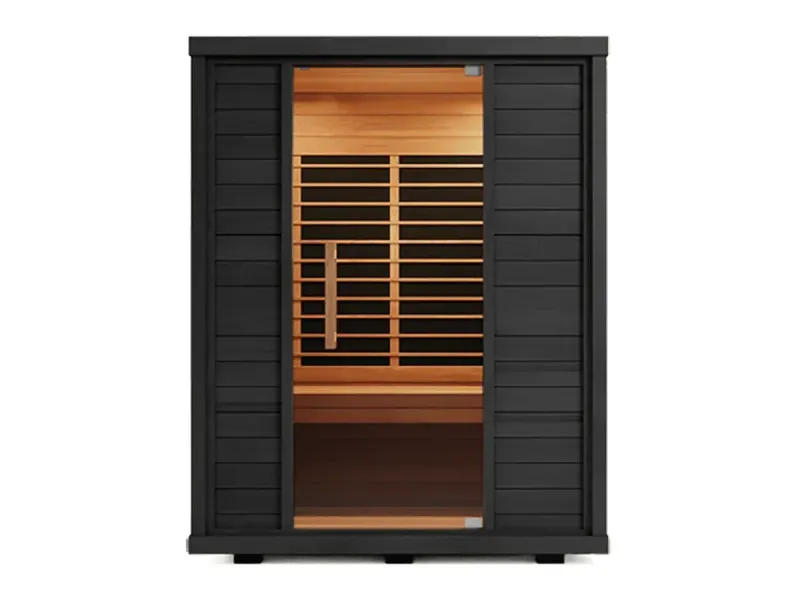
Our pick
165°F full-spectrum heat on a 120V circuit, with a 7-year warranty.
About $6,100–$6,800
Check priceBest home saunas of 2026: we compared 20+ saunas on verified specs, warranties and hundreds of real owner reports to find the 8 worth buying, from $600 blankets to backyard barrels.
The best home sauna for most people is the Sun Home Equinox: a full-spectrum infrared cabin that reaches 165°F on an ordinary 120V circuit, for about $6,100–$6,800.
As of October 2026, we’ve compared more than 20 home saunas across five types, using verified manufacturer specs, warranty terms and hundreds of owner reports from Reddit, Trustpilot and retailer reviews. Eight are worth your money. We also cover two popular saunas we wouldn’t buy, and why.
Our pick
165°F full-spectrum heat on a 120V circuit, with a 7-year warranty.
About $6,100–$6,800
Check price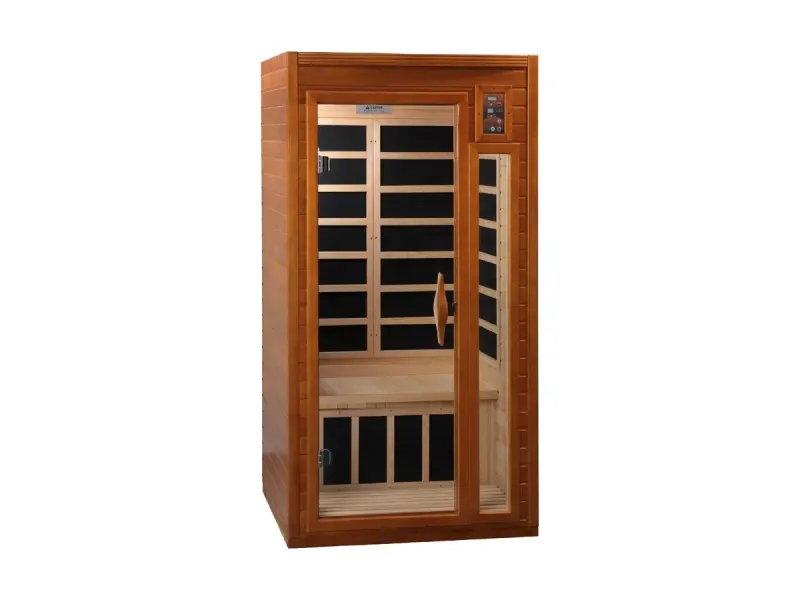
Budget pick
A real hemlock cabin for about a third of the price. Best for one person.
About $1,900–$2,300
Check price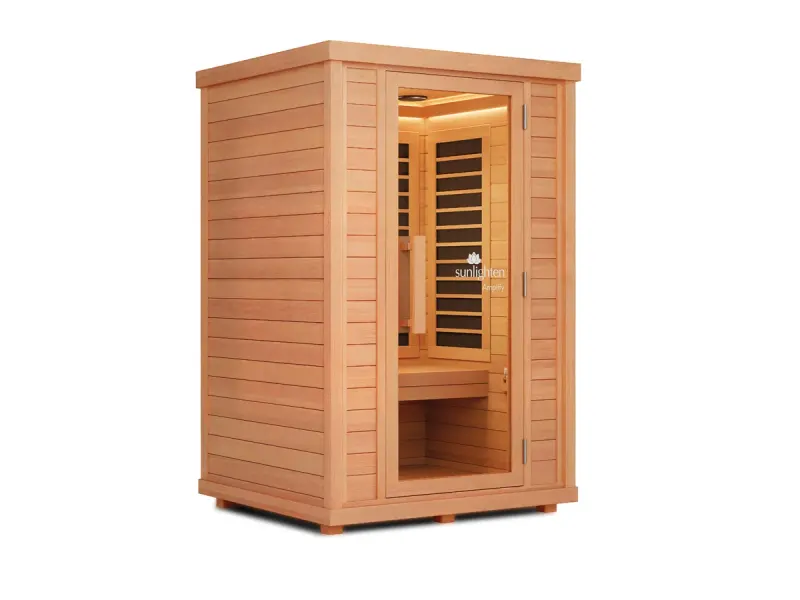
Upgrade pick
The hottest indoor infrared we found, with owners reporting a steady 165–168°F.
About $5,800–$6,000
Check price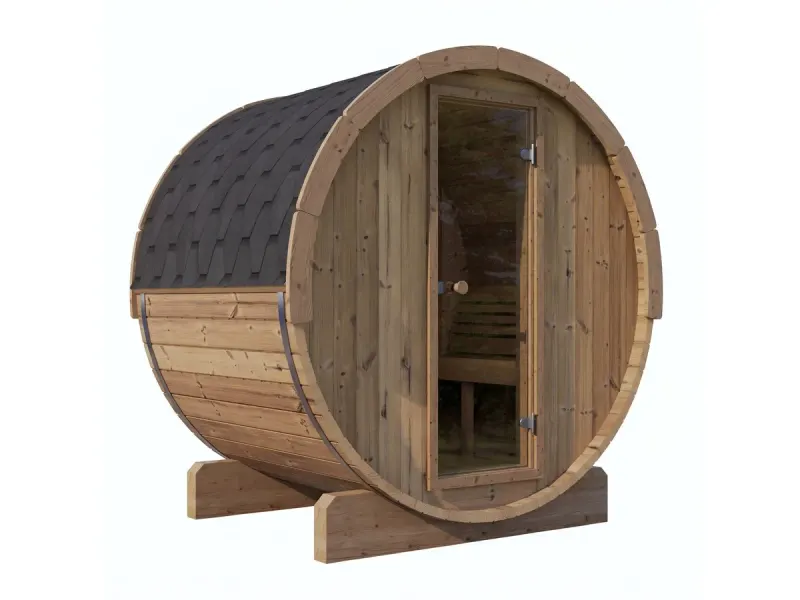
Best barrel
Thermo-spruce barrel with a lifetime warranty, for real heat and steam outdoors.
About $4,400–$4,900 + about $950 shipping (heater extra)
Check price| Pick | Sauna | Heat | Capacity | Power | Warranty | Price |
|---|---|---|---|---|---|---|
| Best overall | Sun Home Equinox 2-Person Check price | Full-spectrum infrared | 2 people | 120V / 20A | 7 years | About $6,100–$6,800 |
| Hottest infrared | Sunlighten Amplify II Check price | Full-spectrum infrared | 2 people | 120V | 7 years | About $5,800–$6,000 |
| Best budget | Dynamic Saunas Barcelona Check price | Far infrared | 1 person | 120V / 15A | 5 years | About $1,900–$2,300 |
| Best barrel | SaunaLife E6 Barrel Check price | Traditional (heater extra) | 2–3 people | 240V | Limited lifetime | About $4,400–$4,900 + about $950 shipping (heater extra) |
| Small yards | Redwood Outdoors Duo Check price | Traditional (6kW Harvia) | 2 people | 240V | 1 year (structure) | About $5,900 (heater included) |
| Outdoor infrared | Sun Home Luminar Check price | Full-spectrum infrared | 2 people | 240V / 20A | Limited lifetime | About $11,000–$11,600 |
| Best portable | Sunlighten Solo System Check price | Far infrared (lie-down) | 1 person | 120V outlet | 7 years (heaters) | About $2,100–$3,000 |
| Apartments | HigherDOSE Infrared Sauna Blanket Check price | Far infrared blanket | 1 person | 120V outlet | 1 year | About $600–$700 |
Prices checked October 2026 and change often. Tap a sauna to jump to its review.
Best for the most heat and features for the money on a 120v circuit
A full-spectrum cabin that reaches 165°F on a household 120V circuit, with chromotherapy and Bluetooth audio, for roughly $1,000 less than Clearlight.
The Sun Home Equinox gets the balance right for most homes. It reaches 165°F, hotter than most infrared cabins on a 120V circuit, uses full-spectrum heaters, and costs about $6,100–$6,800. It shares a cabin platform with the Sunlighten Amplify II, so the design is proven even though Sun Home only launched in 2021. You’ll need a dedicated 20A GFCI circuit, which is usually a simple job for an electrician.
Our one reservation is track record. Genuine multi-year owner reports are still scarce, and some praise online reads as promotional, so we’ve only used first-hand accounts with specific detail. The 7-year warranty covers the cabinet and heaters.
Independent owner reports are still thin, because the brand only launched in 2021, and some online praise reads as promotional. Real owners we found praise fast heat-up and solid temperatures. An Eclipse buyer from the same brand complained of missing steps in the instructions and a crushed LED connector. Sun Home itself acknowledges past delivery delays.
Skip it if: You want a decade-long track record before spending $6,000 or more.
Best for the hottest indoor infrared session
The most-searched sauna brand in the US, and the Amplify II runs hotter than its rivals. Owners report a steady 165–168°F, thanks to angled front heaters and less glass to leak heat.
Sunlighten is the most-searched sauna brand in the US (about 11,000 searches a month), and the Amplify II earns its reputation for heat. Owners report a steady 165–168°F, helped by front heaters angled toward you when seated and halogen boosters. At about $5,800–$6,000 it’s priced close to the Equinox. Choose it if peak heat matters most.
Buy it with your eyes open. Buyers often describe relentless sales follow-up, and service complaints are a pattern when things break. Get the warranty terms in writing, including who pays for labor and shipping on parts.
Owners who have one that works love the heat. An Amplify II owner reports a consistent 165–168°F with the door opened mid-session. The negatives are about service rather than the cabin: an owner with a defective unit was asked to rewire panels themselves, mPulse touchscreens freezing is a known complaint, and many buyers describe aggressive sales follow-up. Sunlighten holds 4.6/5 from about 4,000 Trustpilot reviews.
Skip it if: Smooth after-sales service matters more to you than peak temperature.
Best for the cheapest real cabin worth buying
A compact Canadian hemlock cabin that plugs into a regular outlet for about a third of the price of premium brands. Owners say it really suits one person.
The Dynamic Barcelona costs about a third of a premium cabin and plugs into a regular 120V/15A outlet. It’s the cheapest wooden sauna we’d recommend. Treat it as a one-person sauna that can squeeze in a guest, and preheat for 30–40 minutes before you get in.
Owners agree it does the job for the price, with two caveats. It takes 30–40 minutes to get properly warm, and the "1–2 person" label is generous: two adults sit uncomfortably close. One owner reports almost two years of use at two to three sessions a week. Another had an early failure where the replacement part also failed.
Skip it if: You plan to share it, or you want to step in hot within 15 minutes.
Best for a barrel sauna with a lifetime warranty at a lower price
A compact thermo-spruce barrel with contoured thermo-aspen benches and a limited lifetime warranty, at a lower kit price than most rivals.
The SaunaLife E6 is the barrel we’d buy for real heat and steam on a budget. Heat-treated thermo-spruce resists rot, the benches are contoured rather than flat planks, and the limited lifetime warranty beats most kits at this price. Budget for everything else: a 6kW heater, about $950 freight, a 240V circuit and a level base. Check the door alignment and hinge carefully on delivery.
See our best outdoor saunas guide for more barrels, cubes and cabins.
SaunaLife owners are broadly happy with heat and value. One reports 180°F in about 40 minutes with a 6kW Harvia heater, and several call it the best compromise short of a custom build. The repeated gripes: confusing instructions (owners recommend watching other brands’ barrel build videos first), a near-$1,000 shipping fee that some dealers will waive if you ask, and glass doors. A five-month-old EE6G owner found a cracked plastic hinge, and another owner never got their door to seal.
Skip it if: You want everything in one box. The heater, shipping and electrician add $2,500 or more.
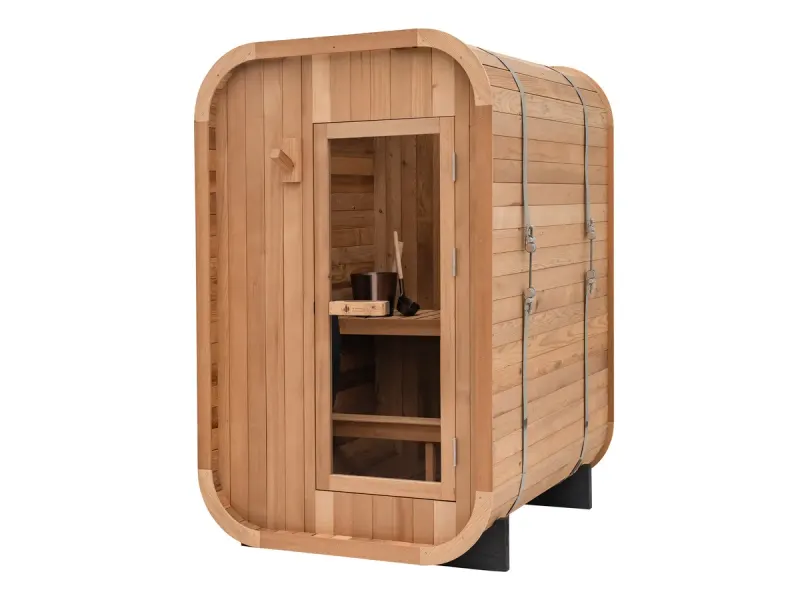
Best for a compact traditional sauna for small yards
A compact Thermowood cube with a Harvia heater included. It’s the smallest footprint for a real hot-rock sauna outdoors.
The Redwood Outdoors Duo puts a hot-rock sauna in a footprint of about 4 by 5 feet. Heat-treated Thermowood resists rot better than plain spruce or pine, and the Harvia heater is included, so the price is closer to complete than most kits. The one-year structural warranty is short, so inspect every panel on delivery.
A cold-climate owner who used their Redwood cube daily for six months is happy with it. They waited 10 weeks for delivery (another buyer waited four months), spent about $1,000 on the electrical hookup, and found the heater has plenty of power. On the downside, a Portland owner reports the exterior trim chipping after a year of rain and heater mounting screws pulling loose. Trustpilot reviewers often criticise the roofing instructions.
Skip it if: A long structural warranty matters to you. One year is short for a $6,000 purchase.
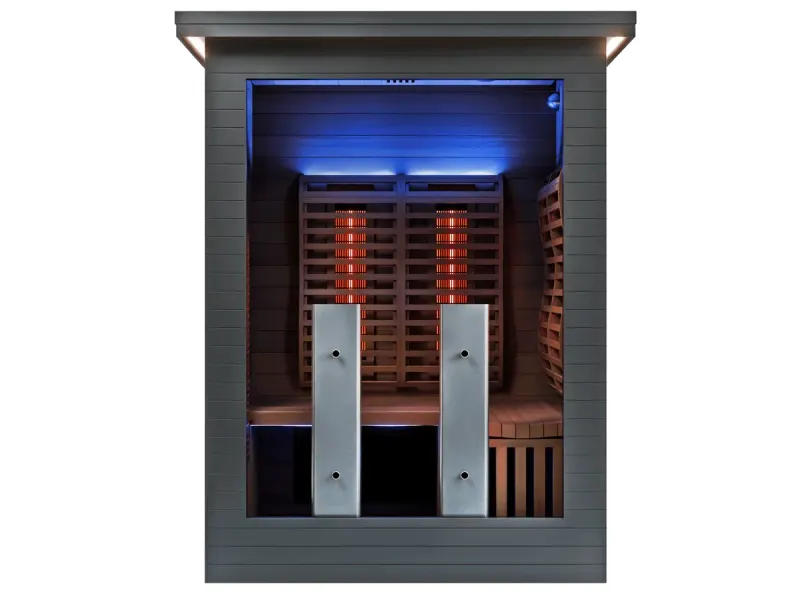
Best for an infrared sauna that lives outdoors with no cover
An aluminium-clad infrared cabin built to sit outside year-round without a roof or cover. It heats in about 15 minutes and reaches 170°F.
Most infrared saunas need a roof over them outdoors. The Sun Home Luminar doesn’t. Its aluminium cladding is built to sit in the open year-round, and it reaches 170°F. It’s expensive and needs a 240V circuit and a level pad, but nothing else in infrared does the job as well outdoors.
The most detailed independent review we found comes from a Luminar 5-person owner in coastal California. It is ready in about 15 minutes, holds heat well (still 20°F above ambient a day later) and is "perfect for two adults". The catch was total cost, which came in far above budget once the pad and electrical work were added. Another owner reports two years outdoors with no issues.
Skip it if: You can put a sauna indoors or under cover. Cheaper indoor cabins do the same job.
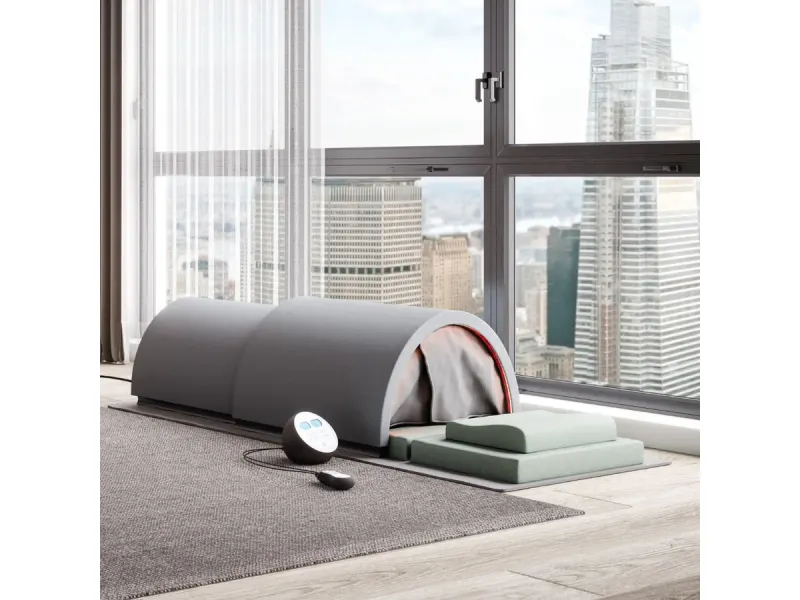
Best for infrared you can lie down in, then fold away
A lie-down infrared dome and heated pad that plug into any outlet and fold into a closet, from the most-searched sauna brand in the US.
The Sunlighten Solo is a different take on portable: you lie on a heated pad under an infrared dome instead of sitting in a tent. It plugs into any outlet, folds into a closet, and carries a 7-year heater warranty, which is rare for a portable. Expect a gentler, slower heat than a cabin, and plan for a long preheat.
A several-year Solo owner says it needs 30–45 minutes of preheat to feel the full effect, and felt the heaters grew less effective over time. Another owner wanted more intensity. Owners like the lie-down position and how close the heaters sit to the body. Sunlighten’s wider service record is mixed, so keep your paperwork.
Skip it if: You want true sauna temperatures. A cabin or a hot-air pod gets far hotter.

Best for small apartments and renters
The best-known sauna blanket. It gives you a sweat session in a one-bedroom apartment, then stores flat under a bed.
For a studio apartment, a sauna blanket is the only option that takes up no floor space. HigherDOSE is the most established brand. Buy the washable insert, and store it flat. See our sauna blanket comparison for alternatives.
Owners who stick with it report two or more years of trouble-free use, and one owner’s wife uses it nightly to relax tight muscles. The complaints are practical. Smells build up if you skip cleaning, so owners recommend the washable insert or a cotton liner. One owner measured only about 115°F inside, and another found panels dead after storing it folded. Store it flat.
Skip it if: You have room for a pop-up tent. Owners find tents hotter and easier to keep clean.
Two saunas that appear on other “best” lists didn’t make ours. Here’s why.
The Plunge sauna appears on plenty of best-of lists, and on paper it’s impressive: 230°F, room for 4–5, indoor or outdoor. But several owners report the same structural problem. The heavy glass door gradually pulls the front frame out of square until the door won’t close, and owners were asked to prove the sauna was level before the frame was looked at. Owners also report burnt-out fan and light controllers and trouble holding heat in East Coast winters. At about $11,000, that pattern is too risky for us. The warranty is 2 years.
Heavenly Heat gets about 6,000 searches a month, thanks largely to heavy advertising. Owners praise the lack of glue smell. They also report missing or protruding pins, rough edges (the company includes sandpaper), more than an hour to reach 150°F, and orders taking three months or more to arrive. One buyer cancelled after the ship date kept slipping. We’ll revisit when delivery and build quality settle down.
We haven’t tested these saunas hands-on, and we won’t pretend otherwise. Most “tested” reviews come from a few weeks with a sample. What predicts whether you’ll be happy in year five is what thousands of owners report over years. Here’s what we did:
We recommend products from brands we partner with, and we earn a commission when you buy through our links. That never changes what we tell you about a product’s weaknesses. Every pick above has its owner complaints listed. How we make money.
Traditional saunas heat the room air to about 150–195°F with an electric or wood-burning stove, and you ladle water onto hot rocks for bursts of steam (the Finns call it löyly). Infrared saunas use panels that warm your body directly while the air stays at about 120–150°F. Infrared is easier to tolerate for longer sessions and much easier to install. Traditional is hotter and more social, and it’s what most of the long-term Finnish health research studied. Our infrared vs traditional sauna guide goes deeper.
Far-infrared saunas (like the Dynamic Barcelona) use only far-infrared heaters, which do most of the work of warming you. Full-spectrum saunas (Clearlight, Sun Home, Sunlighten) add near- and mid-infrared heaters. Plenty of buyers prefer full-spectrum, but there’s little research showing it delivers extra health benefits. Far infrared alone gives a solid sweat. Pay for full-spectrum because you like the experience, not because of a marketing claim.
A “2-person” sauna is often snug for two adults, and owners say this about Clearlight and Dynamic alike. If you’ll regularly share, size up one person. Measure the space, then add clearance. Clearlight asks for 2–4 inches around the cabin, and you’ll need room for the door to swing.
Electrical work is the hidden decision in every sauna purchase.
| Sauna type | Typical power need | Electrician? |
|---|---|---|
| Sauna blanket, pop-up | Standard 120V outlet | No |
| 1–2 person infrared cabin | 120V, dedicated 15–20A circuit | Often (for a new circuit) |
| Large or outdoor infrared | 240V, 20–30A | Yes |
| Traditional (4.5–9kW heater) | 240V, 30–50A, usually hardwired | Yes, plus a permit in most areas |
As a rule of thumb, a 6kW heater draws 25 amps and needs a 30-amp circuit. Always follow the heater manual’s figures. Read our sauna electrical requirements guide before ordering anything that needs 240V.
Canadian hemlock is the standard for budget and mid-range infrared cabins: stable, light and nearly scent-free. Red cedar smells wonderful and resists decay, which is why it’s common on outdoor barrels. Thermowood (heat-treated softwood) resists rot and warping best in wet climates.
Chromotherapy lights, Bluetooth audio and app control are nice extras, but owners report apps as the first thing to break, on Clearlight, Sun Home, Sunlighten and Plunge alike. Pay for heat and build quality first, and treat smart features as a bonus.
The sticker price is only part of it. Here’s the full first-year cost by type:
| Cost | Infrared cabin (indoor) | Traditional outdoor (barrel/cube) | Portable / blanket |
|---|---|---|---|
| Sauna | $1,900–$8,000 | $5,000–$8,000 (heater often included) | $600–$1,000 |
| Electrical work | $0–$1,000 (new 20A circuit) | $500–$2,500 (240V run, permit) | $0 |
| Base or pad | None | $500–$2,000 (concrete pad, pavers or deck) | None |
| Delivery and assembly | Usually free; DIY 2–4 hours | Freight; DIY 1–2 days with a helper | Free; 20–60 minutes |
| Typical total | $2,000–$9,000 | $6,000–$12,500 | $600–$1,000 |
Ranges reflect manufacturer prices in October 2026 and typical quotes reported by owners. One Redwood owner spent about $1,000 on the electrical hookup for a $6,000 kit, and a Sun Home Luminar owner said total cost came in “4x” over their initial budget once the pad and wiring were added. See our full home sauna cost guide.
A 2-person infrared sauna costs about $0.40 per session to run. The Clearlight Sanctuary 2 draws 2,250 watts, so an hour, including warm-up, uses about 2.25 kWh. At roughly 17 cents per kWh (around the US residential average), that’s about 38 cents. Four sessions a week comes to around $7 a month.
A traditional sauna with a 6kW heater costs about $1 per session. It draws more power and takes 30–45 minutes to heat, though the thermostat cycles the heater off once it’s hot, so it rarely runs at full power for the whole session. Budget about $17 a month at four sessions a week, and more in winter for an outdoor sauna. A 1,500W portable like the Sauna Pod costs about 25 cents per session.
To check your own costs, multiply the heater’s kilowatts by your hours of use (including preheat) and your rate per kWh from your electric bill.
Regular sauna use is linked to better heart health in long-term studies, though most of that research looked at traditional Finnish saunas. The best-known study followed 2,315 Finnish men for about 20 years. Men who used a sauna four to seven times a week had markedly lower rates of fatal heart disease and death from all causes than men who went once a week (Laukkanen et al., JAMA Internal Medicine, 2015). A follow-up from the same group found frequent sauna users had a lower risk of dementia and Alzheimer’s disease (Laukkanen et al., Age and Ageing, 2017).
Those studies show association, not proof, and they involved men in Finland using traditional saunas. Research on infrared saunas specifically is smaller and shorter-term. A 2018 systematic review of dry sauna bathing found evidence for benefits in some conditions, but called for better-quality trials. Treat a home sauna as a pleasant habit with promising evidence, not a treatment.
For most people, the Sun Home Equinox is the best home sauna. It reaches 165°F with full-spectrum heaters on a standard 120V/20A circuit and costs about $6,100–$6,800. If you want the most heat, the Sunlighten Amplify II runs at a steady 165–168°F, according to owners.
Neither is better overall. Traditional saunas heat the air to about 150–195°F and let you pour water on hot rocks for steam, and they're what most long-term health research studied. Infrared saunas run cooler (about 120–150°F), heat up faster, usually plug into a household outlet and cost less to run. Choose traditional for heat and steam, and infrared for convenience.
Start with 10–15 minutes and build up. Traditional sauna users typically stay 10–20 minutes per round, and infrared sessions often run 20–40 minutes because the air is cooler. Get out straight away if you feel dizzy or unwell, and drink water before and after.
A typical 2-person infrared sauna costs about 40 cents per session to run, or roughly $7 a month at four sessions a week, based on about 2.25kW and a US average of around 17 cents per kWh. A traditional sauna with a 6kW heater costs about $1 per session (around $17 a month), because it draws more power and takes longer to heat.
Most 1–2 person infrared saunas don't. Models like the Sun Home Equinox, Sunlighten Amplify II and Dynamic Barcelona run on 120V, though most want a dedicated 15A or 20A circuit. Larger and outdoor infrared saunas, such as the Sun Home Luminar, need 240V. Traditional saunas with rock heaters almost always need a 240V, 30A circuit installed by an electrician.
Often, yes, at least for the electrical work. Running a new 240V circuit usually needs an electrical permit and inspection. Outdoor saunas may also count as accessory structures with setback rules, and HOAs can restrict them. Check with your local building department before you order.